Have you ever felt as if your electronic usage such as social media and gaming was negatively effecting your life? Studies show that this is not something that is just a farce, but there are genuine psychological impacts to having an addiction to video games and social media.
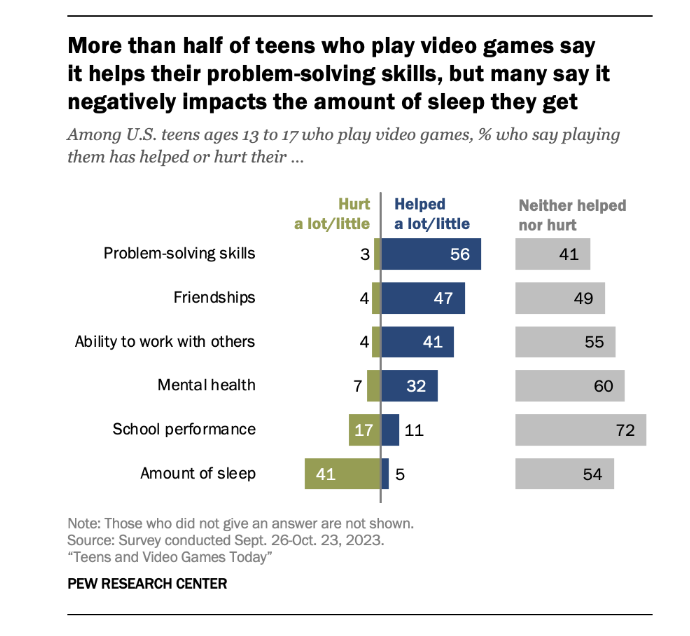
According to a study from Mohammed et. al , video game addiction can lead to changes in the brain that are similar to brain activity of those addicted to substances and gambling. Other symptoms include social withdrawal, psychological withdrawal, and consequences coming from long gaming sessions such as lack of sleep. This can then negatively impact performance in school and relationships with other people.
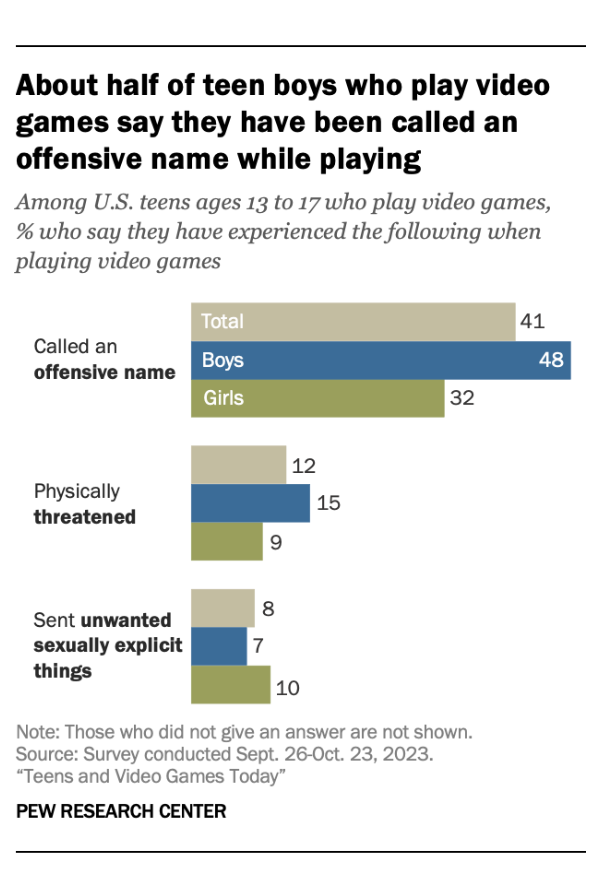
Oftentimes when young gamers play games, they often form different online personas which can then cause them to become reliant on this other persona which can cause the lines between reality and the game. There are also often social aspects to these games like voice or text chat which can lead to a sense of belonging or it can be a place for negativity.
This could be especially prevalent if you partake in microtransactions. These are small monetary transactions that could either allow you to purchase an in game currency to then purchase items that will help you advance. The danger as found in this article Xiao and Henderson these microtransactions that often they are so small that you usually won't realize how much you are spending if you purchase in game currency often. Also with games that only allow you to purchase items with in game currency can be deceptive as well, since you don't know how much money you are spending exactly on an item. Unless you do the calculations, which most times people won't take the time to calculate the exact cost.
These microtransactions will add up quite quickly, which responsible spending is an important skill to carry on from adolescence into adulthood.
As reported by Christian Montag et al., 'Freemium', is a hybrid of the English words 'free' and 'premium'. In the realm of Freemium games, this means that the basic version of a game can be downloaded at no monetary cost. However, the person playing a game pays either with his/her data produced while playing, by paying attention to ads, e.g., in exchange for further game-energy, or by paying money to access 'premium' content. Freemium games are very relevant for the present work investigating elements of apps built to prolong usage time, because such games most often run with the business model of 'gaming service in exchange for your data'.
Highlighted by Christian Montag et al., Perhaps one of the most prominent features of social reward mechanisms in social media is the iconic 'thumbs up' (giving or getting a 'Like'; (co-)developed by Justin Rosenstein, former worker at Facebook; see also independent.co.uk). Likes demonstrate either positive social feedback on one's own posts or to give another person such feedback. The power of such feedback has also been proven neuroscientifically, when Instagram users are confronted with their own posted pictures from their account which were manipulated by being presented either with many or few 'Likes' (in this case hearts). Pictures being presented with many Likes elicit stronger activity in the ventral striatum, an area involved of the processing of a rewards. It has even been demonstrated that lower gray matter volumes of the nucleus accumbens are associated with longer and higher frequent usage of the Facebook app on smartphones underlining its addictive power. Additionally, several other studies observed that lower gray matter volumes were associated with higher addictive tendencies.
Some ways you can combat this is developing some other hobbies you enjoy, such as going on nature walks, playing team sports, and exercising. You can also manage your screen time through the settings on your phone and also limiting notifications from social media apps.
Data and visuals from the Pew Research Center. Image source: Jeffrey Gottfried and Olivia Sidoti, 2024. Accessed via the Pew Research Center website